Planets and Planet formation
I am Nicolas Kurtovic, a postdoctoral researcher at the Max Planck Institute for Astronomy (MPIA). My main interest is the formation of planets around young stellar objects, especially around binaries and very low mass stars!
My favorite telescope is ALMA, which traces the cold dust and gas from where the planets are forming and growing. I am also interested in learning how to use any telescope that can help me understand the formation of planets. Check my latest works! I have been using ALMA, JWST, and many other facilities to study the most common stars in our galaxy.
Recent highlights
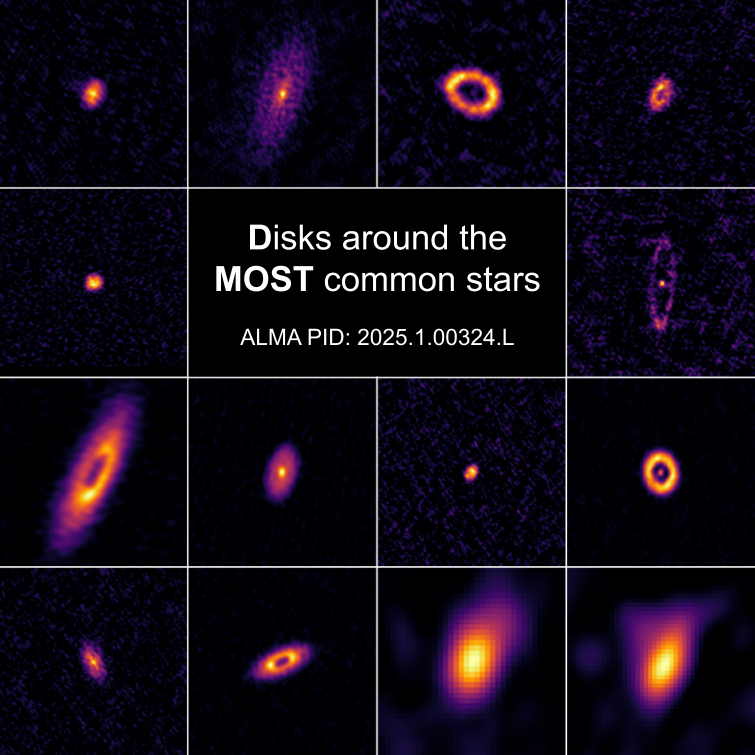
An ALMA Large Program to observe Very Low Mass Stars!
Very Low Mass Stars are the most common stellar population in our Galaxy. During ALMA Cycle 12, we got awarded 105 hours of ALMA to study the structure of disks around Very Low Mass Stars (2025.1.00324.L; PI: Kurtovic, Nicolas), and learn about the conditions for planet formation around these objects.
List of ALMA Large Programs.
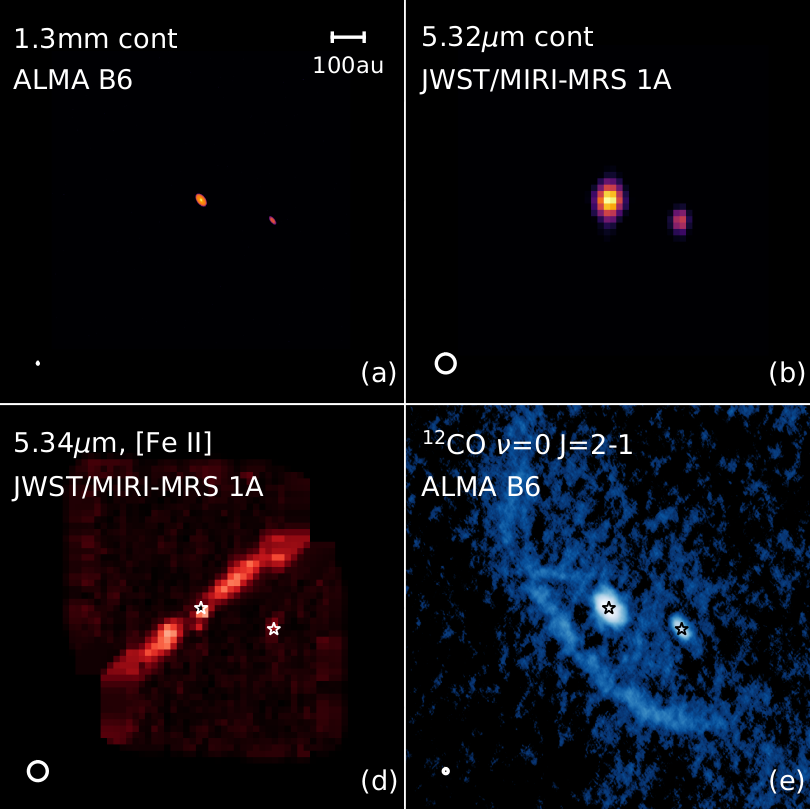
The impact of external companions in the inner disk composition.
Observations from the MINDS collaboration, with the JWST/MIRI-MRS instrument, allowed us to explore how the dynamical interactions could influence the inner disk composition. We found evidence of bright jets, variable water emission, among some other interesting results.
Publication: ADS
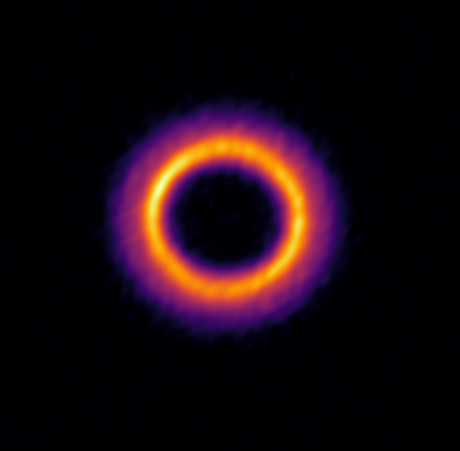
ESO-Gruber School
As part of the SOC of the ESO-Gruber Summer School, lead by Pooneh Nazari, we prepared a 1-week summer school with lectures and practical sessions for a group of 20 astronomy students. I was also the instructor for a hands-on session with JWST/MIRI-MRS. Check for more information in the link below:
Link: ESO-Gruber School
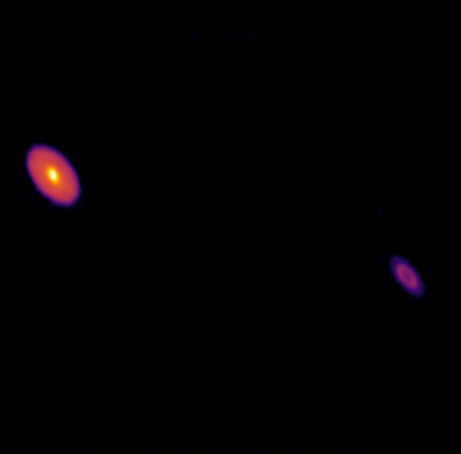
The RW Aur binaries interacted a few hundred years ago
Extremely precise astrometry measurements made with ALMA observations, and historical multiwavelength observations, have allowed the determination of RWAur B orbit around A. The periastron of the orbit is comparable to the extension of their gas disks, which indicates the systems collided a few hundred years ago.
Publication: ADS
Highlights from collaborations
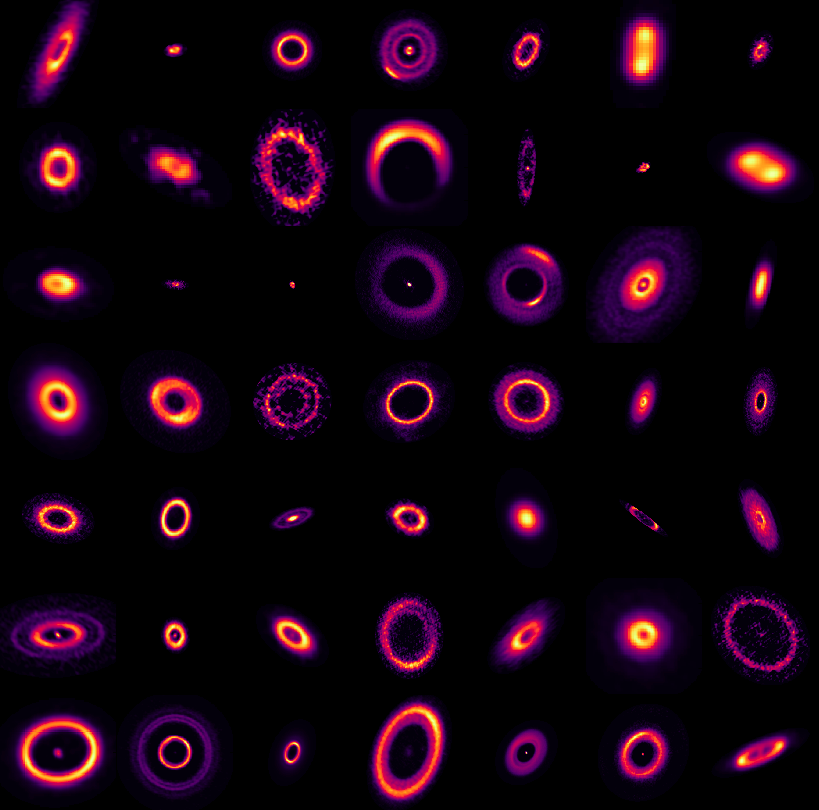
Hidden companions inside of disks with cavities
By searching for perturbations to the Gaia astrometry, we were able to propose candidate companions for a large sample of disks with cavities. I contributed with the ALMA section of the work.
Publication: Vioque et al., incl. Kurtovic, (submitted).
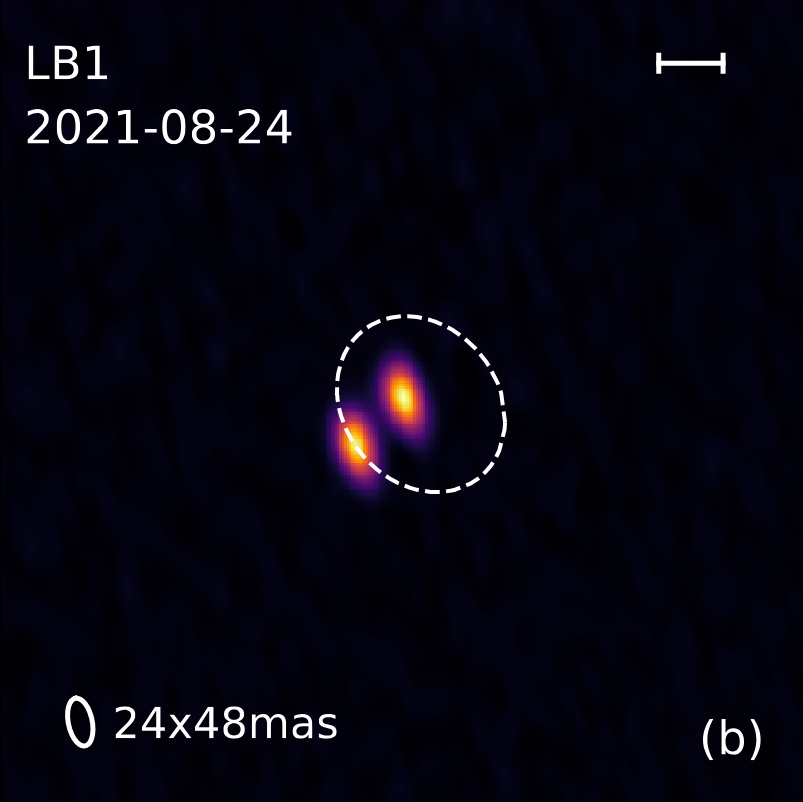
Rich water emission in the disk of a binary.
As part of MINDS, we studied the inner disk emission of a binary system, DF Tau. I contributed with the line emission analysis and the ALMA comparison, we even detected the binary motion with ALMA!
Publication: Grant, Kurtovic, et al., (2024), ADS
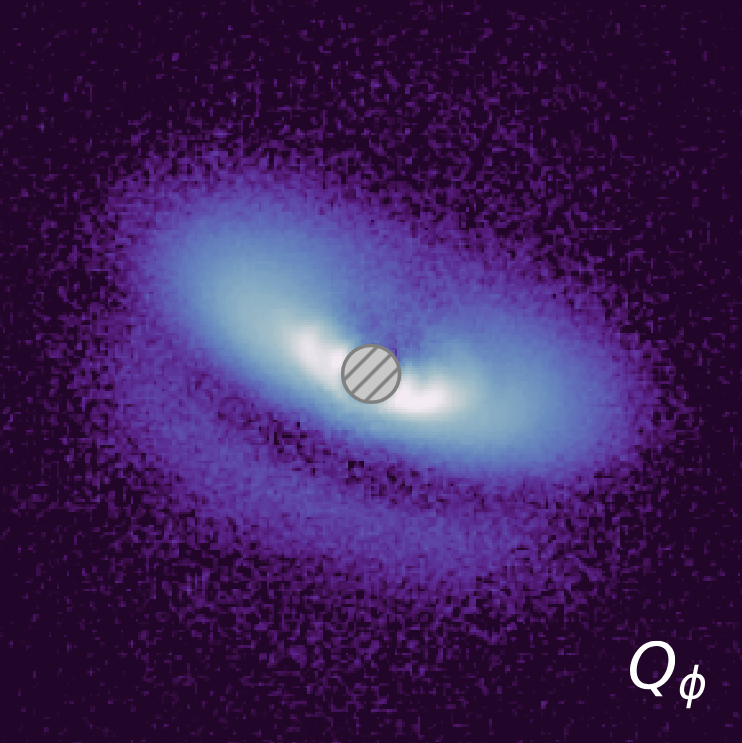
PDS 111: The disk that refuses to age
PDS 111 is a large, massive, and flared disk, with conditions to continue forming planets. I contributed with analyzing the ALMA emission, pushing the boundaries of the angular resolution to resolve a multi-ringed structure.
Publication: Derkink et al., incl. Kurtovic, (2024): ADS